How to Build a Custom AI Chatbot for Small Business Growth
Posted by kevin kevin
Filed in Arts & Culture 115 views
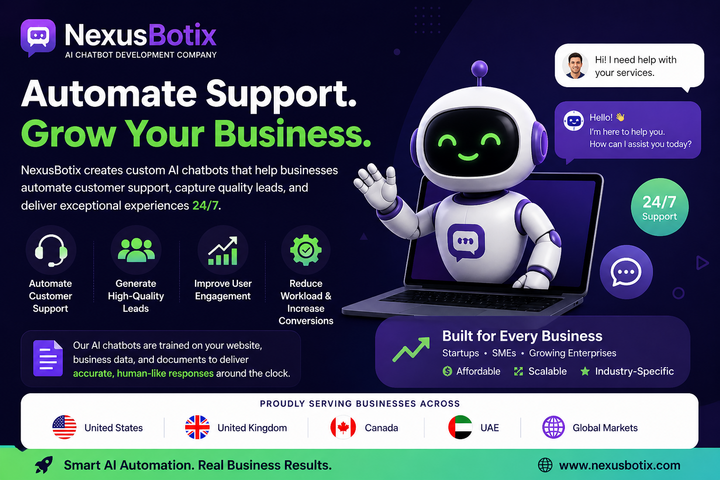
Small businesses are under constant pressure to provide faster customer support, generate more leads, and stay competitive without dramatically increasing costs. AI chatbots are helping businesses solve many of these challenges through automation and smarter customer engagement.
But not all chatbot solutions deliver the same results.
Many businesses start with simple pre-built bots and quickly realize they lack flexibility, personalization, and accuracy. That’s why more companies are choosing to build a custom AI chatbot for small business instead of relying on generic templates.
A custom chatbot can be trained specifically for your products, services, customer questions, and business goals. When implemented correctly, it becomes more than just a support tool — it becomes part of your growth strategy.
Here’s how businesses in the UK, Canada, UAE, and other English-speaking markets can successfully build an AI chatbot that drives real business results.
Start With a Clear Business Goal
Before building a chatbot, businesses should define exactly what they want the system to accomplish.
Many chatbot projects fail because the goals are too broad or unclear.
A successful chatbot usually focuses on solving specific problems such as:
- Reducing customer support workload
- Generating qualified leads
- Automating appointment bookings
- Improving website engagement
- Assisting with product recommendations
For example, an eCommerce store may focus on reducing cart abandonment, while a digital agency may prioritize lead qualification.
Clear objectives help shape the chatbot’s design and functionality.
A Custom AI Chatbot for Small Business Should Solve Real Customer Problems
Businesses often make the mistake of focusing too much on technology instead of customer experience.
The best chatbots solve real user problems quickly and efficiently.
Start by identifying common customer questions and support requests. Review:
- Customer emails
- Live chat transcripts
- FAQs
- Sales inquiries
- Support tickets
This information helps train the chatbot with accurate and relevant responses.
A chatbot that understands real customer concerns performs much better than one built around generic scripts.
Choose the Right AI Chatbot Platform
There are many AI chatbot platforms available in 2026, but not all are suitable for small businesses.
When selecting a platform, businesses should look for:
- Easy customization
- AI-powered conversations
- CRM integration
- Multi-channel support
- Analytics and reporting
- Scalability
The platform should also support integrations with tools your business already uses, such as:
- Shopify
- HubSpot
- Slack
- Google Calendar
For businesses in the UAE and UK, WhatsApp integration is particularly valuable because messaging apps play a major role in customer communication.
Train the Chatbot With Business-Specific Data
This is where custom AI chatbots become far more effective than generic bots.
The chatbot should be trained using your own business information, including:
- Website content
- Product details
- Service descriptions
- Internal documentation
- FAQs
- Pricing information
The more relevant data the chatbot receives, the more accurate and helpful its responses become.
For example, a real estate business may train the chatbot using property listings and location data, while a healthcare clinic may focus on appointment procedures and patient inquiries.
Keep Conversations Natural and Simple
One of the biggest reasons users dislike chatbots is overly robotic communication.
Modern AI chatbots should feel conversational and helpful rather than scripted.
To improve customer experience:
- Use simple language
- Avoid overly technical responses
- Keep messages concise
- Provide clear options
- Allow smooth transitions to human support
Businesses should also test conversations regularly to ensure responses sound natural and useful.
A chatbot that communicates clearly builds more trust with customers.
Add Lead Generation Features
A chatbot should not only answer questions — it should also help grow the business.
Lead generation features may include:
Contact Collection
The chatbot can collect emails, phone numbers, or business details from interested visitors.
Appointment Scheduling
Customers can book consultations or demos directly through the chatbot.
Smart Qualification
The chatbot can ask questions about budget, goals, or service needs before forwarding leads to the sales team.
This automation helps businesses respond faster and improve conversion opportunities.
Test the Chatbot Before Full Launch
Many businesses launch chatbots too quickly without proper testing.
Before going live, businesses should evaluate how the chatbot handles:
- Common customer questions
- Incorrect spellings
- Complex requests
- Multi-step conversations
- Escalation to human support
Testing helps identify weak areas and improve accuracy before customers interact with the system.
It’s also important to monitor real conversations after launch and continue refining responses over time.
Use Analytics to Improve Performance
A custom AI chatbot for small business should continuously evolve based on customer behavior.
Analytics can reveal valuable insights such as:
- Frequently asked questions
- Customer pain points
- Drop-off points in conversations
- Conversion rates
- Lead quality
Businesses can use this information to improve website content, sales processes, and chatbot performance.
Regular optimization helps the chatbot remain effective as customer expectations change.
Focus on Data Security and Privacy
Customer trust is essential when implementing AI systems.
Businesses should ensure their chatbot provider offers:
- Secure data storage
- Encrypted communication
- GDPR compliance
- User permission controls
- Transparent privacy policies
This is especially important for industries handling sensitive information, including healthcare, finance, and legal services.
Strong security practices help businesses maintain credibility and customer confidence.
Conclusion
Building a custom AI chatbot for small business is one of the smartest ways companies can improve customer engagement, automate support, and scale operations efficiently in 2026.
The key is focusing on real customer needs rather than simply adding automation for the sake of technology.
A well-built chatbot can generate leads, improve response times, reduce workload, and create better customer experiences across websites and messaging platforms.
For businesses in the UK, Canada, UAE, and other English-speaking markets, investing in a tailored AI chatbot solution can provide a strong long-term competitive advantage.