Why Custom Ecommerce Development Beats Off-the-Shelf Solutions
Posted by Steve Jonas
Filed in Technology 33 views
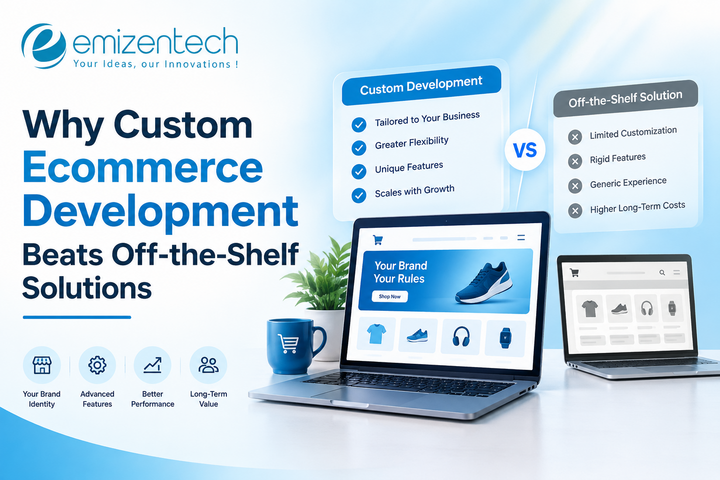
More than 90% of new online stores struggle to survive past their first few years, and a big part of that has to do with the platform choices made early on. Many businesses start with off-the-shelf ecommerce software because it's quick to set up and doesn't require a large upfront investment. But as the business grows, that same convenience often turns into a limitation. Features that once seemed sufficient start to feel restrictive, and workflows that worked for a small catalog start to break down at scale. This article looks at the real differences between custom and off-the-shelf ecommerce development, when each option makes sense, and how to think through the decision for your own business.
What Is Off-the-Shelf Ecommerce Software?
Off-the-shelf ecommerce software refers to pre-built platforms like Shopify, WooCommerce, or BigCommerce that come with ready-made templates, standard features, and a set structure for how a store operates. These platforms are designed to work for a wide range of businesses right out of the box, which means most of the technical groundwork is already done. A store owner can pick a theme, add products, connect a payment gateway, and be live within days. This is exactly why off-the-shelf platforms are so popular among startups and small businesses: they lower the barrier to entry and let a business start selling without hiring a development team. The trade-off is that these platforms are built for the average use case, not for a specific business model, which means certain workflows, integrations, or customizations may be difficult or impossible to implement without significant workarounds.
What Is Custom Ecommerce Development?
Custom ecommerce development involves building a store's architecture, features, and workflows from the ground up, or heavily modifying an existing platform to match a business's exact requirements. Instead of adapting the business to fit the software, the software is built to fit the business. This approach is common among companies with complex product catalogs, unique pricing structures, B2B purchasing requirements, or specific integrations with internal systems like ERP or inventory management tools. For example, a manufacturer selling through both direct-to-consumer and wholesale channels may need different pricing rules, approval workflows, and catalog views for each type of customer. A custom-built store can handle this level of complexity in a way that a standard template usually cannot.
Off-the-Shelf vs Custom Ecommerce: Key Differences
The decision between the two approaches usually comes down to a handful of practical factors that affect how a store performs and grows over time.
Cost
Off-the-shelf platforms typically have lower upfront costs since much of the infrastructure is already built. Custom development requires a larger initial investment, but the cost curve often evens out over time as the business avoids recurring fees for add-ons, apps, and plugins needed to replicate missing features.
Scalability
Off-the-shelf platforms can handle growth up to a certain point, but performance and flexibility often become bottlenecks as order volume, SKU count, or traffic increases significantly. Custom solutions are built with the specific scale of the business in mind from day one.
Customization and Flexibility
Template-based platforms limit how much a business can change without relying on third-party apps or paid plugins. Custom development allows for complete control over design, functionality, and user experience without being boxed into a platform's existing structure.
Performance and Speed
Off-the-shelf platforms carry a certain amount of unnecessary code and features that aren't relevant to every store, which can slow down page load times. Custom-built stores tend to load faster since only the necessary functionality is included.
Third-Party Integrations
Standard platforms usually connect well with popular tools but can struggle with legacy systems or niche software. Custom development makes it easier to build direct, reliable integrations with the exact tools a business already uses.
Security and Compliance
Off-the-shelf platforms handle security updates centrally, which is convenient but also means every store on the platform shares the same vulnerabilities. Custom-built stores allow for security measures tailored to the specific risks and compliance requirements of the business.
7 Reasons Custom Ecommerce Development Wins Long-Term
While off-the-shelf platforms serve their purpose in the early stages, custom development tends to offer more value as a business matures and its requirements become more specific.
Built around your exact business workflow
Every business has unique operational requirements, and a custom store built through eCommerce development services is designed to support these needs rather than forcing teams to work around platform limitations.
No feature bloat or paying for unused tools
Off-the-shelf platforms often require multiple paid apps to unlock functionality that a custom build can include natively, eliminating recurring subscription costs and giving businesses full control over which features their store actually needs.
Easier to scale as order volume and SKUs grow
Custom architecture can be designed to handle high transaction volumes and large product catalogs without the performance issues common on template-based platforms, allowing the store to keep pace as the business expands into new markets.
Full ownership of code and data
Businesses that build custom solutions retain complete control over their codebase and customer data, rather than depending on a third-party platform's policies, pricing changes, or infrastructure decisions that could affect how the store operates.
Seamless integration with ERP and CRM systems
Many established businesses rely on legacy systems for inventory, accounting, or customer management, and custom development makes it possible to connect these systems without complicated workarounds or the data syncing issues common with rigid platforms.
Competitive differentiation
A custom-built storefront can offer a distinct user experience that's harder for competitors using the same template-based platform to replicate, helping a brand stand out through design choices and functionality that feel unique to customers.
Better long-term total cost of ownership
While the initial investment is higher, the reduced dependency on recurring app fees, third-party plugins, and platform limitations often makes custom development more cost-effective for businesses planning to operate at scale for years.
When Off-the-Shelf Still Makes Sense
Despite its limitations, off-the-shelf ecommerce software remains a practical choice in certain situations.
-
Early-stage startups testing a product idea before committing to a larger investment
-
Simple catalog needs where straightforward products and standard checkout requirements don't call for custom logic
-
Limited budgets where teams need to launch quickly without a large upfront investment
-
Market validation for a new product line before scaling infrastructure
-
Seasonal or short-term stores built to run for a limited period without long-term infrastructure needs
-
Small teams without technical staff who need a platform that's easy to manage without ongoing developer support
How Businesses Outgrow Off-the-Shelf Platforms
A common pattern shows up as businesses scale past their early stages: the platform that once worked well starts to hold operations back.
-
Starting point: A mid-sized furniture retailer ran its store on a template-based platform, relying on several third-party apps to manage bulk pricing for wholesale buyers and custom delivery scheduling.
-
Performance strain: As order volume grew, page load times slowed down significantly during peak traffic.
-
Checkout issues: The patchwork of apps began causing checkout errors as more features were layered on top of the base platform.
-
The shift: After moving to a custom-built platform, the business consolidated its pricing logic, delivery scheduling, and inventory sync into a single system.
-
The outcome: Fewer checkout errors and noticeably faster page speed.
This kind of transition tends to happen once a business's operational complexity outpaces what a general-purpose platform was designed to handle.
How to Decide: Custom vs. Off-the-Shelf for Your Business
A few honest questions can help clarify which direction makes more sense.
-
Budget comparison: What is the current budget, and how does it compare to the long-term cost of ongoing app subscriptions?
-
Catalog complexity: How complex are the product catalog, pricing rules, and customer workflows?
-
System dependencies: Does the business rely on legacy systems that need direct integration?
-
Launch timeline: How quickly does the store need to launch?
-
Growth trajectory: What does the growth trajectory look like over the next two to three years?
What to Consider Before Starting a Custom Ecommerce Project
Once a business has decided that custom development is the right direction, a few practical factors determine how well the project sets up for success.
-
Budget: Custom builds require a clear sense of both the initial investment and the ongoing costs of hosting, maintenance, and future updates.
-
Technical requirements: Documenting specific needs, such as catalog complexity, pricing logic, or checkout flows, helps set realistic expectations for scope and timeline.
-
Internal resources: Having someone in-house who can manage requirements, testing, and communication makes the development process considerably smoother, even when the actual build is outsourced.
-
Future growth plans: Architecture decisions made early on should account for expected increases in traffic, product catalog size, or expansion into new sales channels.
-
Integration needs: Identifying which existing systems, such as ERP, CRM, or inventory tools, need to connect with the new platform helps avoid costly rework later in the project.
Working through these factors before development begins tends to reduce scope changes and keeps the project aligned with actual business needs.
Conclusion
Choosing between custom and off-the-shelf ecommerce development ultimately comes down to where a business is today and where it plans to be in the coming years. Off-the-shelf platforms offer a practical starting point, but as operations become more complex, the limitations of a one-size-fits-all system tend to surface. Businesses considering a custom build should take the time to evaluate their specific needs, growth plans, and technical requirements before making a decision. EmizenTech works with businesses across various industries to build ecommerce solutions tailored to their exact operational needs.
FAQs
1. Is custom ecommerce development more expensive than Shopify?
The upfront cost is generally higher for custom development, but the total cost over several years can be lower once app fees, plugin costs, and workaround expenses are factored in.
2. How long does custom ecommerce development take?
Timelines vary based on complexity, but a custom build typically takes longer than setting up a template-based store, often ranging from a few months to longer for enterprise-level projects.
3. Can I migrate from an off-the-shelf platform to a custom solution later?
Yes, migration is possible and fairly common as businesses scale, though it requires careful planning to preserve data, SEO rankings, and order history during the transition.
4. Is custom development worth it for small businesses?
It depends on the complexity of the business model. Small businesses with simple catalogs may not need custom development right away, but those with unique workflows or growth plans may benefit from it sooner than expected.