Common Ear Problems and How to Treat Them Fast
-
April 19, 2026 5:37 AM PDT
There are few things more disruptive to daily life than an ear problem. Whether it is the sharp, throbbing pain of an ear infection that keeps you awake at night, the maddening constant ringing of tinnitus that follows you everywhere, the uncomfortable pressure of blocked ears during a flight, or the gradual frustration of not being able to follow conversations the way you once could — ear problems have a way of demanding attention in the most insistent ways possible.
The ears are among the most sensitive and sophisticated structures in the human body. They operate continuously, processing thousands of sounds simultaneously while maintaining balance and spatial awareness. Their complexity makes them vulnerable to a wide range of conditions — from simple wax buildup that resolves in minutes to progressive hearing loss that develops silently over years.
The encouraging reality is that most common ear problems are highly treatable — and many are entirely preventable — when you understand what causes them and how to respond effectively. This guide covers the most common ear health issues affecting people of all ages, their causes, their symptoms, and the most effective treatment and prevention strategies available. Whether you are dealing with an active problem or simply want to protect your ears going forward, this is your complete reference guide.
Problem 1: Earwax Impaction — More Common and More Serious Than You Think
Earwax buildup is one of the most common ear complaints seen by healthcare providers. While earwax is natural and protective, problems arise when it accumulates faster than the ear's self-cleaning mechanism can remove it — forming a hard, compacted plug that blocks the ear canal and impairs hearing.
Earwax impaction is more common in people who use cotton swabs — which push wax deeper rather than removing it — in those who wear hearing aids or earplugs that interfere with natural wax migration, in people with particularly narrow or curved ear canals, and in older adults whose earwax tends to be drier and less mobile.
Symptoms include muffled or reduced hearing in the affected ear, a sensation of fullness or pressure, mild earache, ringing or buzzing sounds, and occasionally mild dizziness or a reflex cough triggered by pressure on the ear canal.
Treatment begins with earwax softening drops available over the counter — preparations containing carbamide peroxide, mineral oil, or glycerin effectively soften compacted wax over several days. Once softened, gentle warm water irrigation using a rubber bulb syringe can flush loosened wax from the canal.
For stubborn or severe impaction — or if symptoms include significant pain, vertigo, or sudden complete hearing loss — seek professional treatment. Audiologists and ENT specialists can safely remove impacted wax using microsuction or professional irrigation without risk of injury to the eardrum.
Never attempt to remove earwax with cotton swabs, ear candles, bobby pins, or any other objects inserted into the ear canal. These approaches cause far more harm than good.
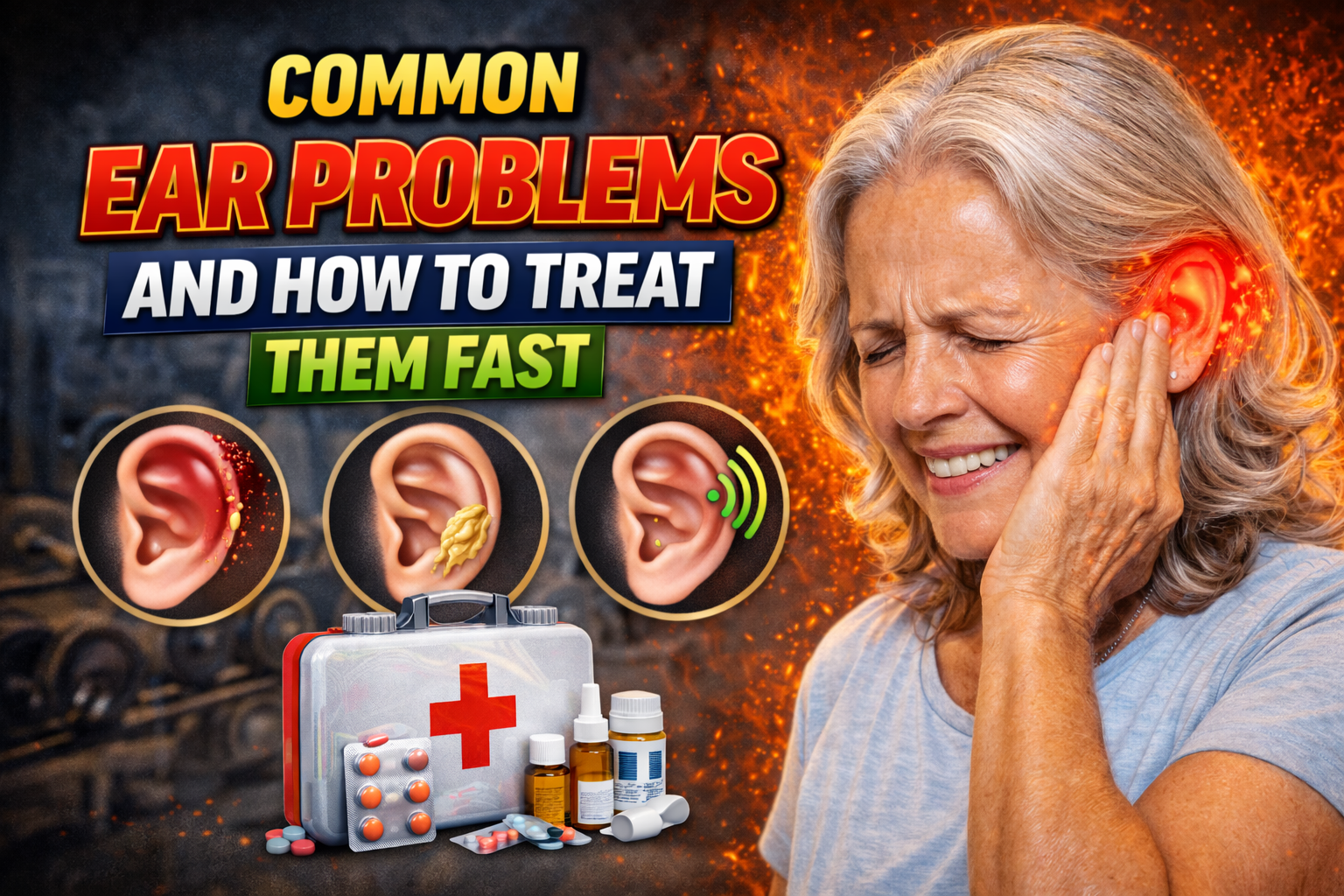
Problem 2: Outer Ear Infection — Swimmer's Ear
Otitis externa — commonly called swimmer's ear — is an infection of the skin lining the outer ear canal. It occurs when the protective acidic environment of the ear canal is disrupted, typically by prolonged moisture exposure, allowing bacteria or fungi to multiply and infect the canal lining.
Swimming is the most common trigger — hence the name — but swimmer's ear can also develop from excessive sweating, humid weather, skin conditions like eczema or psoriasis affecting the ear canal, aggressive ear cleaning that removes protective wax, and inserting contaminated objects into the ear.
Symptoms include itching inside the ear canal that progressively worsens, increasing ear pain — particularly when the outer ear is pulled or pressed — redness and swelling of the canal, and a watery or puslike discharge. In severe cases, the ear canal may swell shut, causing significant hearing reduction.
Treatment involves prescription antibiotic or antifungal ear drops depending on whether the infection is bacterial or fungal in origin. Pain relief through over-the-counter analgesics and keeping the ear dry during treatment are essential components of recovery. Most cases resolve completely within seven to ten days with appropriate treatment.
Prevention involves keeping ears dry after water exposure, using swimmer's ear prevention drops after swimming, avoiding inserting objects into the ear canal, and managing underlying skin conditions that make the canal more susceptible to infection.
Problem 3: Middle Ear Infection — Otitis Media
Middle ear infections occur behind the eardrum when bacteria or viruses — most commonly following a cold, flu, or upper respiratory infection — cause inflammation and fluid accumulation in the middle ear space. The Eustachian tube, which normally drains fluid from the middle ear to the back of the throat, becomes swollen and dysfunctional, trapping fluid that becomes infected.
Middle ear infections are most common in young children whose Eustachian tubes are shorter and more horizontal than adults — making drainage more difficult. However, adults experience them too, particularly those prone to allergies, frequent respiratory infections, or who smoke.
Symptoms include ear pain that can range from mild to severe, a feeling of fullness or pressure in the ear, muffled hearing, fluid drainage from the ear if the eardrum ruptures, and fever particularly in children. Chronic or recurrent middle ear infections can cause lasting damage to the eardrum and hearing ossicles if inadequately treated.
Treatment depends on severity and the age of the patient. Mild cases in adults often resolve without antibiotics within several days — warm compresses, pain relievers, and nasal decongestants to support Eustachian tube drainage are typically recommended initially. Bacterial infections require antibiotic treatment. Recurrent middle ear infections may require surgical insertion of small drainage tubes — called grommets or tympanostomy tubes — to ventilate the middle ear and prevent fluid reaccumulation.
Problem 4: Tinnitus — Living With Ringing in the Ears
Tinnitus — perceived sound in the ears without an external source — is one of the most prevalent and distressing ear conditions affecting adults worldwide. It presents as ringing, buzzing, hissing, whooshing, clicking, or humming sounds that only the affected individual can hear. It may be constant or intermittent, affect one or both ears, and range from mildly noticeable to completely debilitating.
The underlying mechanism of most tinnitus involves abnormal neural activity in the auditory pathways following damage to cochlear hair cells. The brain, deprived of normal auditory input from damaged hair cells, generates phantom signals perceived as sound. The most common triggers include noise-induced hearing loss, age-related hearing decline, earwax impaction, ear infections, high blood pressure, certain medications, and psychological stress.
Management strategies include treating any identifiable underlying cause, sound therapy using white noise or nature sounds to mask tinnitus particularly at night, cognitive behavioral therapy to reduce the psychological distress associated with chronic tinnitus, hearing aids when hearing loss is a contributing factor, and stress management through regular exercise and mindfulness practices.
While a definitive cure for most chronic tinnitus does not yet exist, effective management strategies allow the majority of sufferers to significantly reduce its impact on daily life and sleep quality.
Problem 5: Hearing Loss — Types, Causes, and Solutions
Hearing loss is one of the most common chronic health conditions worldwide, affecting people across all age groups. It exists on a spectrum from mild — difficulty hearing soft sounds — to profound — inability to hear even very loud sounds. Understanding the type of hearing loss is essential for choosing the right treatment approach.
Conductive hearing loss occurs when sound cannot efficiently travel through the outer or middle ear to the inner ear. Common causes include earwax impaction, middle ear infections with fluid, perforated eardrum, and abnormal bone growth in the middle ear. This type of hearing loss is frequently treatable — either medically or surgically.
Sensorineural hearing loss — the most common type in adults — results from damage to cochlear hair cells or the auditory nerve. Causes include noise exposure, aging, certain medications, viral infections, and genetic factors. This type is generally permanent but highly manageable with modern hearing aids or cochlear implants in severe cases.
Mixed hearing loss involves components of both conductive and sensorineural loss simultaneously and requires a combined treatment approach addressing both elements.
Modern hearing aids are extraordinarily effective — far more sophisticated than the bulky, whistling devices of previous generations. Today's hearing aids are virtually invisible, wirelessly connected to smartphones, capable of automatically adjusting to different sound environments, and dramatically effective at restoring speech clarity and sound quality. Early fitting produces the best outcomes — do not delay seeking help.
Problem 6: Barotrauma — Pressure-Related Ear Pain
Ear barotrauma occurs when pressure changes in the environment — most commonly during airplane descent, scuba diving, or driving through mountains — create a pressure imbalance between the middle ear and the external environment. This imbalance stretches the eardrum, causing pain, pressure, muffled hearing, and sometimes dizziness.
The Eustachian tube normally equalizes this pressure through swallowing, yawning, or jaw movement. When the Eustachian tube is swollen — from a cold, allergies, or infection — pressure equalization fails and barotrauma results.
Prevention and management involves swallowing, yawning, or chewing gum during pressure changes, using the Valsalva maneuver — gently blowing with nostrils pinched and mouth closed — to force air through the Eustachian tube, using nasal decongestant sprays before flying when congested, and avoiding flying with active sinus infections or severe nasal congestion when possible.
Severe barotrauma that does not resolve within hours or causes significant pain, bleeding, or hearing loss requires prompt medical evaluation to rule out eardrum perforation or inner ear barotrauma.
Frequently Asked Questions (FAQs)
Q1. How do I know if I have an ear infection?
Common signs include ear pain ranging from mild to severe, a feeling of fullness or pressure, muffled hearing, discharge from the ear, and sometimes fever. Symptoms lasting more than 24 to 48 hours or accompanied by significant pain warrant prompt medical evaluation and treatment.
Q2. Can ear infections go away without antibiotics?
Many mild middle ear infections in adults resolve naturally within several days without antibiotics. Doctors often recommend a watchful waiting approach initially, using pain relief and decongestants. Bacterial infections that worsen or persist beyond 48 to 72 hours typically require antibiotic treatment.
Q3. What causes sudden hearing loss in one ear?
Sudden sensorineural hearing loss in one ear is a medical emergency requiring immediate evaluation. Causes include viral infection, vascular events affecting cochlear blood supply, autoimmune conditions, and acoustic trauma. Prompt treatment with corticosteroids significantly improves recovery outcomes when started quickly.
Q4. Is tinnitus a sign of something serious?
Tinnitus is usually not dangerous itself but can signal an underlying condition requiring attention — including hearing loss, high blood pressure, earwax impaction, or medication side effects. Sudden tinnitus in one ear with hearing loss warrants urgent medical evaluation to rule out serious causes.
Q5. How can I stop my ears from hurting on a plane?
Swallow frequently during descent, chew gum, yawn, or use the Valsalva maneuver — gently blowing with nostrils pinched. Use nasal decongestant spray 30 minutes before landing if congested. Specially designed filtered earplugs for air travel also significantly reduce barotrauma discomfort effectively.
Q6. Can diet affect hearing health?
Absolutely — nutrients including magnesium, omega-3 fatty acids, folate, zinc, and antioxidants directly support cochlear function and protect against hearing decline. A diet rich in fatty fish, leafy greens, berries, and nuts supports inner ear blood flow and reduces oxidative damage to delicate hearing structures.
Conclusion
Ear problems are common — but they are not something you simply have to accept and endure. With the right knowledge, timely treatment, and consistent preventive habits, the vast majority of ear conditions can be effectively managed, treated, or entirely prevented. Listen to your ears — literally. When they signal that something is wrong, respond promptly. The earlier you address ear health issues, the better the outcomes. Your hearing is worth protecting with everything you have got.
Our Recommendation
Protecting your ears starts with protecting your overall health from the inside. I personally recommend a natural health support supplement — carefully crafted with clean, science-backed natural ingredients to support healthy circulation, reduce inflammation, and promote total body wellness for men and women of all ages. No harsh chemicals. No synthetic fillers.
Join thousands of people who have already made it a non-negotiable part of their daily wellness routine and are feeling genuinely better from the inside out.
[Click the Button Below to Buy Now and Start Supporting Your Health Naturally Today]