Precision Requirements of Horizontal Long U Bending and Expanding Machine
Posted by Zhenyu Yao
Filed in Family & Home 44 views
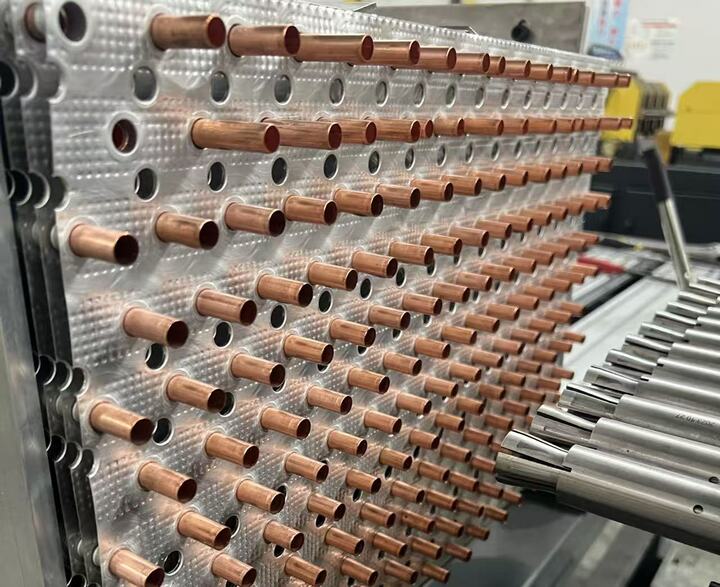
The horizontal long U bending and expanding machine is core precision processing equipment widely used in the production of heat exchangers and air-conditioning copper tubes. Its machining precision directly determines the assembly accuracy, heat exchange efficiency and service life of tubular workpieces. In mass industrial production, strict precision standards are essential to ensure product consistency and operational stability, forming a complete set of technical requirements for dimensional accuracy, forming quality and system stability.
Dimensional precision is the most fundamental technical index of the equipment, covering tube length, center distance and end flatness. For the straight section length of long U tubes, the tolerance is strictly controlled within ±0.05mm for conventional specifications. For tubes shorter than 800mm, the overall length error shall not exceed ±0.5mm, while tubes over 800mm allow a maximum deviation of ±0.8mm. The U-shaped center distance, a key assembly parameter, maintains a high precision of ±0.1mm. Besides, the length difference between the two ends of the processed tube must be less than 1.0mm to avoid assembly deviation in subsequent procedures.
Forming precision focuses on the bending and expanding quality of tubular workpieces. The bending angle accuracy is controlled within 0.5° to ensure uniform radian of U-shaped structures without deflection or distortion. During tube expansion, the flattening ratio of the bending arc area shall be lower than 15%, which effectively prevents tube wall thinning, wrinkling or cracking. Meanwhile, the equipment guarantees smooth and flat tube openings with no burrs or deformation, meeting the tight fit requirements of heat exchanger assembly.
System stability precision is the key to long-term high-precision operation. Equipped with a full servo closed-loop control system, the machine realizes real-time detection and automatic correction of processing errors throughout feeding, straightening, cutting, bending and expanding processes. The high-precision alloy die set ensures stable precision after long-term cyclic operation. In continuous batch production, the equipment maintains consistent precision without obvious deviation, adapting to high-efficiency production cycles of about 26 seconds per unit.
In conclusion, the multi-dimensional precision requirements of the equipment lay a solid foundation for high-quality tubular product processing. Strict implementation of precision standards not only improves product qualification rate and assembly accuracy, but also optimizes the overall performance of heat exchange equipment, which is of great significance for standardized and high-precision manufacturing in the HVAC industry.