Soft-State Tubing: An Indispensable Material for Tube Expander Operation
Posted by Zhenyu Yao
Filed in Entertainment 77 views
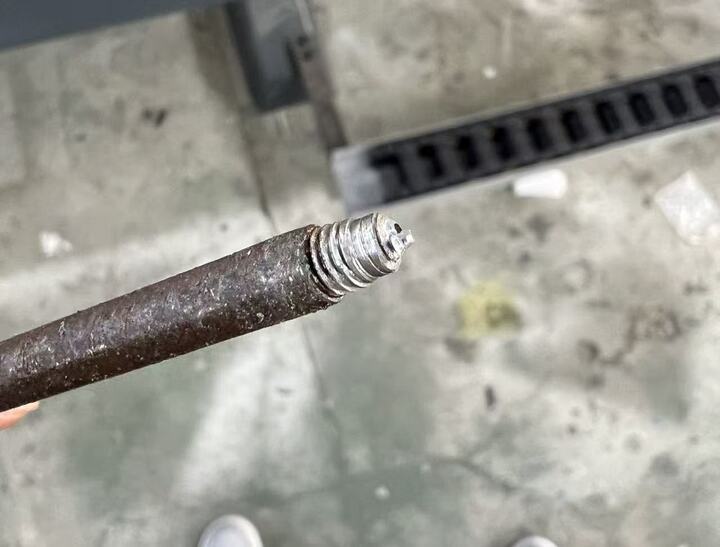
Tube expanders are widely used core equipment in HVAC systems, boiler manufacturing, heat exchanger production and refrigeration industries. Their core function is to expand tube ends through mechanical rolling or hydraulic pressure, enabling tight and seamless connection between tubes and tube sheets. In actual industrial operation, there is an unbreakable operating standard: only soft-state tubing can be used for tube expanding processing. Hard-state tubing is strictly prohibited for expanding operations, and this requirement is determined by both the working principle of expanders and the physical properties of metal tubes.
The tube expanding process relies entirely on plastic deformation of metal materials. When a tube expander works, internal rollers or hydraulic components exert continuous radial pressure on the inner wall of the tube. This pressure exceeds the elastic limit of the metal tube, forcing the tube wall to produce permanent plastic deformation. The expanded tube closely fits the holes of tube sheets to form a pressure-resistant, leak-proof and vibration-resistant integrated joint. Soft-state tubing refers to annealed metal tubes with excellent ductility and low hardness. After professional annealing treatment, the internal residual stress of the tube is completely eliminated, and the metal grain structure becomes uniform and loose. Such materials can undergo uniform stretching and deformation under external pressure without brittle failure.
In contrast, hard-state tubing retains high hardness, great tensile strength and poor ductility due to lack of annealing treatment. Once hard tubes are used for expansion, multiple quality failures will inevitably occur. Firstly, the tube wall is prone to sudden cracking and splitting during cold expansion, as hard metal cannot bear rapid plastic deformation. Secondly, uneven local deformation will appear on the tube surface, leading to gaps between the tube and tube sheet. These invisible gaps will cause medium leakage of gas or liquid in later equipment operation. In addition, forced expansion of hard tubes will also bring extra load to the expander rollers and mandrels, accelerating tool wear and even causing permanent damage to expensive expanding equipment.
Field construction cases have fully verified this rule. Many on-site maintenance accidents of heat pumps and boilers are caused by misusing hard drawn tubes instead of soft annealed tubes. Even following standard expanding procedures strictly, hard tubes still crack at the tube end under rolling pressure.
In conclusion, soft-state tubing is not an optional choice but a mandatory prerequisite for qualified tube expanding. Manufacturers and construction workers must strictly distinguish material states before operation. Adhering to this material standard ensures stable expanding quality, prolongs service life of processing equipment, and guarantees long-term safe operation of heat exchange and pressure-bearing equipment.