Distressed Properties for Sale in Dubai: A 2026 Investor’s Guide to Below-Market Deals
Posted by Sarah Mastan
Filed in Other 43 views

Every now and then, a property comes onto the Dubai market at a price that makes you look twice. The seller needs to move fast, so they price it below what similar homes are going for, and whoever is ready and informed gets a genuine bargain. These are distressed properties, and for investors, they’re one of the most interesting ways into Dubai’s market. This guide breaks down distressed properties for sale in Dubai in plain language: what they are, why they show up, how to find the real deals, and how to buy one without getting caught out. No jargon, no fluff, just what you actually need to know in 2026.
What Is a Distressed Property, Exactly?
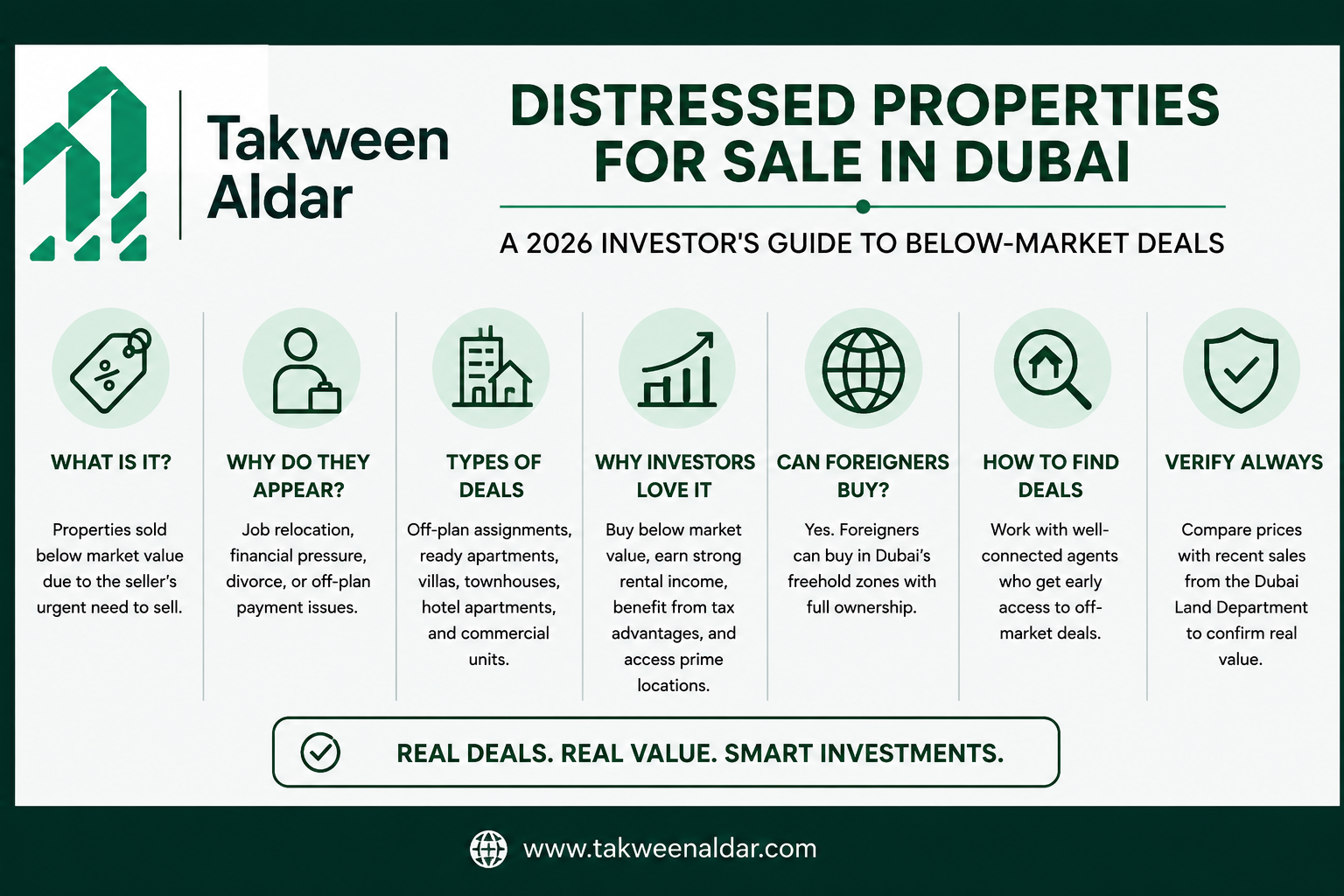
Let’s start with the basics. A distressed property is simply a home that’s being sold below its real market value because the owner needs to sell quickly. Most sales happen at a relaxed pace, with the seller holding out for the best possible price. A distressed sale is the opposite. Something in the seller’s life has changed, and speed now matters to them more than squeezing out the highest price.
That urgency is the whole point. When a seller is in a hurry, they’re often willing to accept less, and the gap between their asking price and the home’s true value is where your opportunity sits. The property itself is usually perfectly good. It’s the seller’s situation that creates the saving, not a problem with the home.
Why Do Distressed Properties Appear in Dubai?
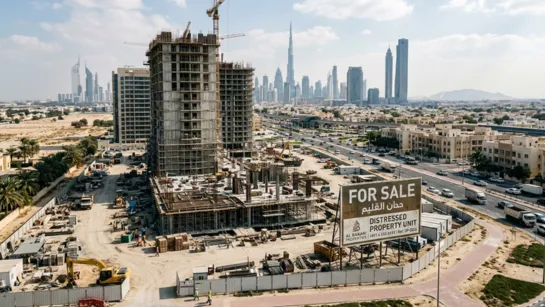
So why would anyone sell a good property for less than it’s worth? It usually comes down to timing and life events. A few common reasons come up again and again:
- A job relocation abroad, where the owner needs to sell before they leave.
- Financial pressure or debts that need clearing quickly.
- A divorce or family change that means dividing assets fast.
- An off-plan buyer who can no longer keep up with their payment plan and needs to exit before the building is finished.
In each case, the seller’s priority is a quick, clean sale. None of this means the property is flawed. More often than not, it’s a desirable home in a good area that simply landed in a hurry-up situation.
The Types of Distressed Deals You’ll Come Across

Distressed deals come in a few different shapes, and it helps to know what you’re looking at.
Off-plan assignments are one of the most common. This is when someone bought a property that’s still under construction, then needs to get out before it’s handed over. They sell their contract to you, you take over the remaining payment plan, and you step into their place. Because the original buyer just wants out, these can be priced very keenly.
Ready apartments and villas are the other big category. These are completed, move-in-ready homes in established communities, sold by owners who need to exit quickly. With these, what you see is what you get, which makes them easier to judge.
You’ll occasionally also find townhouses, hotel apartments with tenants already in place, and commercial units in the distressed market. The same simple principle applies across all of them: a motivated seller creates the saving.
Why Investors Love Distressed Properties in Dubai
Why do so many investors actively hunt for these deals? The appeal is straightforward.
Buying below market value means you start ahead. Instead of paying full price and waiting years for the property to grow in value, you’re already holding something worth more than you paid for it on the day you collect the keys.
On top of that, Dubai’s rental demand stays strong thanks to a steady flow of new residents, so a well-bought distressed property can earn good rental income or be improved and resold. The tax-friendly setup helps too, because more of any gain stays with you rather than disappearing to the taxman. And since these deals turn up in sought-after areas, you’re often buying into prime locations at a level the open market rarely offers.
Can Foreigners Buy Distressed Property in Dubai?
A quick note for overseas buyers: yes, you can absolutely do this. Foreign nationals can own distressed property in Dubai’s designated freehold zones, with full ownership, just like any other home. You don’t need a residence visa or a local sponsor to buy, and a valid passport is enough to get started. The distressed market is open to international investors in exactly the same way the regular market is.
How to Actually Find Distressed Properties in Dubai

Here’s the honest truth: good distressed deals are not easy to find on your own. The genuinely underpriced ones tend to sell fast, and many never make it to the big public listings at all. They get snapped up quietly, often before they’re advertised, through agents who hear about them first.
That’s the real challenge. By the time a great deal is sitting on a public portal for everyone to see, it’s frequently either gone or not as good as it first looked. The investors who consistently land the best distressed properties usually have two things going for them: they keep a close eye on the market, and they’re plugged into people who get early word of off-market deals.
This is exactly why a well-connected local agent makes such a difference in this part of the market. Someone with their ear to the ground can flag a deal the moment it appears, and sometimes before it goes public, which gives you the head start that distressed buying rewards.
How to Tell a Real Deal From a Fake One

Not every property labelled a distressed deal actually is one. Discount is a powerful word, and some listings use it to grab attention without offering a real saving. So before you get excited, make sure the deal is genuine.
The simplest way is to compare the asking price against what similar homes in the same building or community have recently sold for. Dubai keeps detailed transaction records through the Dubai Land Department, so the real picture is there to be checked rather than guessed. If a property is truly priced under what comparable homes are fetching, you’ve likely found a real opportunity. If it’s roughly in line with everything else, the distressed label is just marketing.
It’s also worth understanding why the property is being sold below value, and making sure there isn’t a hidden reason, such as a problem with the building or the unit, sitting behind the saving.
Doing Your Due Diligence (The Part You Can’t Skip)
Distressed buying moves quickly, but that’s no excuse to skip your checks. If anything, the speed makes careful due diligence even more important. Run through this before you commit:
- Confirm the seller actually owns the property, and verify the title deed through official Dubai Land Department channels.
- Check there are no unpaid dues, existing loans against the property, or legal claims that would quietly become your problem.
- Make sure any agent you deal with is RERA-licensed, so you’re working with a regulated professional.
- For an off-plan assignment, confirm the unit is properly registered through Oqood and get the developer’s no-objection certificate for the transfer.
- Read every contract properly so you know exactly what you’re taking on.
None of this takes long with the right help, and it’s what separates a smart purchase from an expensive mistake.
How the Buying Process Works
The good news is that buying a distressed property follows the same legal path as any other Dubai purchase. It just tends to move faster, because the seller wants a quick close. In short, you agree the terms and sign a memorandum of understanding that locks both sides in, the seller clears any outstanding obligations and provides a no-objection certificate, and ownership is then transferred and registered with the Dubai Land Department, which issues the title deed in your name.
The one thing to be ready for is pace. Because a good distressed deal attracts plenty of interest, having your paperwork and your decision ready in advance can be the difference between getting the property and watching someone else take it. And if you can’t be in Dubai in person, you can appoint a representative through a Power of Attorney and handle the whole thing remotely.
The Risks to Keep in Mind
Distressed deals are exciting, but they’re not risk-free, and it pays to go in with your eyes open. A few things to watch:
- They move fast, so you often have to decide quickly, which is much harder if you haven’t done your homework upfront.
- Not every discount is real, so always verify the saving against actual market data.
- Hidden liabilities, like unpaid dues or claims, can turn a bargain into a burden if you skip your checks.
- The property’s condition might need work, so factor that into your plans.
- With off-plan assignments, the project still has to be completed, so the usual construction and timing risk applies.
The reassuring part is that every one of these risks can be managed with proper due diligence and the right people guiding you.
Why Working With the Right Team Matters
By now you can probably see the pattern: distressed buying rewards people who are informed, fast, and well-advised. Trying to do all of it alone, especially from overseas, is where buyers tend to come unstuck.
This is where the right partner earns their place. A RERA-licensed specialist like Takween AlDar focuses on sourcing genuine, verified distressed properties for sale in Dubai, including off-market deals you won’t easily find on your own, and handles the due diligence, the developer paperwork, and the transfer for you. Instead of chasing listings and hoping a deal is real, you get vetted opportunities and someone making sure each one actually stacks up. For an investor, that mix of early access and proper checks is what turns the distressed market from risky into rewarding.
Frequently Asked Questions
What is a distressed property in Dubai?
It’s a home sold below its market value because the owner needs to sell quickly, often due to relocation, financial pressure, a family change, or an off-plan deadline. The property itself is usually fine; it’s the seller’s urgency that creates the saving.
Are distressed properties in Dubai a good investment?
They can be. Buying below market value means you start with built-in value rather than paying full price, and Dubai’s rental demand stays strong. The key is making sure the deal is genuine and doing your due diligence before you buy.
Can foreigners buy distressed property in Dubai?
Yes. Foreign nationals can buy distressed property with full ownership in Dubai’s designated freehold areas. You don’t need UAE residency or a sponsor, and a valid passport is enough to start.
How do I find distressed properties in Dubai?
The best ones sell fast and are often off-market, so they rarely sit on public portals for long. Keeping a close eye on the market and working with a well-connected, RERA-licensed agent gives you early access to genuine deals before they disappear.
What is an off-plan assignment?
It’s when someone who bought a property still under construction sells their contract before it’s handed over. You take over their position and the remaining payment plan, stepping into the purchase in their place. These often appear in the distressed market when the original buyer needs to exit.
How do I know a distressed deal is real?
Compare the price against what similar homes in the same building or area have recently sold for, using Dubai Land Department transaction records. If it’s genuinely priced under comparable homes, it’s likely a real deal. It also helps to understand why the property is being sold.
Is it safe to buy distressed property in Dubai?
Yes, as long as you do your checks. Verify ownership and the title deed through the Dubai Land Department, check for unpaid dues or claims, use a RERA-licensed agent, and for off-plan deals confirm Oqood registration and the developer’s no-objection certificate.
Final Thoughts
Distressed properties are one of the few ways to buy into Dubai’s market at less than the going rate, and that’s a real edge when you get it right. The opportunities are out there in 2026, but they go to the buyers who are prepared, who check the facts, and who have the right people in their corner. Do your homework, lean on proper due diligence, and don’t rush into a deal you haven’t verified. And when you’re ready to find genuine below-market opportunities, the team at Takween AlDar can help you spot the right ones and guide you safely from offer to ownership.
This guide is for general information only. Property rules, regulations and market conditions can change, so always confirm the latest details with the Dubai Land Department and a RERA-licensed advisor before making a purchase.