The Future of eKYC: Innovations and Trends Shaping the Identity Verification Landscape
Posted by Digipay Guru
Filed in Technology 167 views
Know Your Customer (KYC) regulations are becoming increasingly stringent worldwide, as regulators mandate more robust identity verification and due diligence by businesses. This is catalyzing massive growth in electronic Know Your Customer (eKYC) solutions, which enable remote onboarding and background checks on customers.
eKYC refers to the use of digital technologies to verify customer identities remotely, without physical document handling. eKYC systems allow businesses to complete onboarding formalities and conduct due diligence digitally, via web or mobile apps. This unlocks huge benefits in customer experience, cost efficiency, and risk management.
This article will explore the key drivers and innovations defining the eKYC landscape, as well as adoption trends across major industries.
Key Factors Driving eKYC Adoption
A number of regulatory, technology, and market factors are catalyzing eKYC adoption globally:
1. Stringent KYC and AML Regulations
Financial regulators worldwide are tightening KYC, AML, and CFT (anti-money laundering and counter-financing of terrorism) norms to combat rising financial fraud.
For instance, the EU’s recent 5th Anti-Money Laundering Directive (AMLD5) requires financial institutions to undertake increased due diligence and prove effective transaction monitoring. The directive also mandates stricter KYC checks during onboarding.
Such regulations are forcing businesses to adopt robust eKYC procedures to efficiently handle due diligence.
2. Need for Superior Customer Experiences
Today’s consumers, especially millennials and Gen Z, expect instant, mobile-first digital experiences. eKYC enables remote onboarding and verification in minutes. This significantly improves customer experience compared to lengthy in-person KYC processes.
Businesses are implementing eKYC to attract digitally savvy customers who expect seamless onboarding.
3. Cost Benefits
eKYC solutions eliminate the need for physical document handling, in-person verification, and manual background checks. This results in ~40% savings in KYC costs for financial institutions. eKYC also enables faster customer acquisition.
Lower onboarding costs and faster customer onboarding provide compelling monetary incentives for eKYC adoption.
4. Enhanced Risk Management
eKYC solutions integrate data from official records, watchlists, sanctions lists, and other sources to build a holistic view of customer risk.
Sophisticated analytics further help detect identity fraud, money laundering threats, and other risks. eKYC thereby enhances risk management and compliance.
5. Increasing Digital Identities
Governments across the globe are taking initiatives to provide unique digital identity proofs to citizens. For instance, India’s Aadhaar system has issued biometric digital IDs to over 1.3 billion people.
Such digital identities are enabling eKYC and online authentication while reducing reliance on physical documents.
Cutting-Edge Innovations in eKYC Technology
Several leading-edge technologies are enhancing eKYC capabilities and use cases:
1. Advanced Biometrics
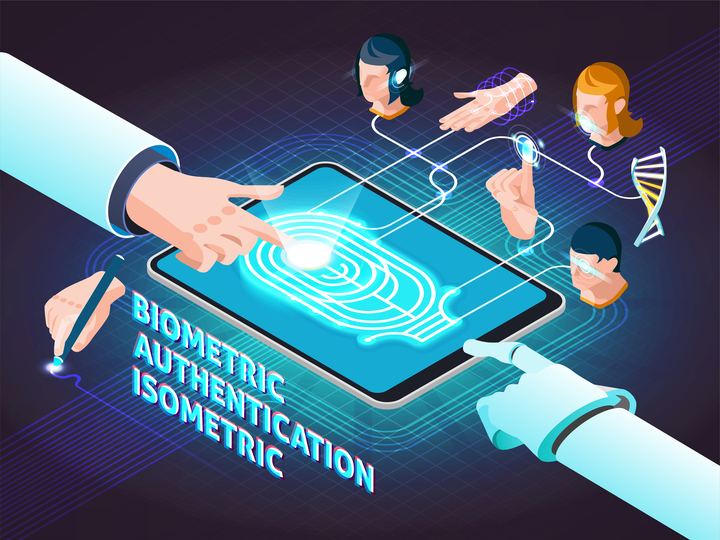
Biometric authentication using fingerprints, face matching, iris/retina scans, and voice recognition is becoming highly reliable. eKYC solutions are integrating biometrics for smooth, non-invasive user experiences.
For instance, Mastercard’s Identity Check uses face matching to verify users in real-time during onboarding.
2. Artificial Intelligence and Machine Learning
AI and ML algorithms enable automation in several eKYC processes:
-
ID verification and information extraction from documents
-
Matching selfies to ID photos for biometric authentication
-
Liveness detection to prevent spoofing
-
Scanning documents for tampering
-
Risk scoring of individuals based on billions of data points
This improves the efficiency, accuracy, and security of eKYC systems.
3. Blockchain and Self-Sovereign Identity
Blockchain technologies allow users to own and control their identity data, while selectively disclosing verified credentials to businesses. Startups like Civic and Bloom enable such decentralized identity solutions.
Experts believe decentralized identity systems could complement or replace traditional KYC in the long run. But adoption is still early.
4. Big Data and Analytics
By combining internal and external data from credit bureaus, government agencies, watchlists, sanctions lists, etc. eKYC platforms create rich 360-degree risk profiles of customers.
Powerful analytics help detect identity theft, suspicious activities, money laundering risks, and more.
5. CX Capabilities and Integrations
eKYC platforms provide API integrations and SDKs to embed KYC flows into a company’s application. This powers swift, in-app identity verification during onboarding.
Advanced platforms also enable hybrid models - combining eKYC with selective physical document checks for higher-risk cases. Progressive KYC allows custom risk-based verification.
6. Shared KYC Utilities
Shared KYC utilities and networks allow businesses to collaborate on identity verification, reducing costs and complexity.
SINGPASS KYC, for instance, enables businesses in Singapore to easily retrieve citizens' government-verified identity attributes.
eKYC Adoption Trends in Major Industries
eKYC use cases and adoption patterns vary across sectors:
Banking Sector
Banks are moving rapidly towards eKYC to onboard customers digitally for accounts, credit cards, loans, and more.
Advanced authentication using biometrics enables presence-less onboarding. Platforms like Mitek drive omnichannel eKYC adoption across the web, mobile, tablets, and contact centers.
Banks also employ progressive KYC - basic eKYC for low-risk customers, and physical document verification for high-risk applicants.
Financial Services
Across lending, investments, digital assets, and payments, eKYC provides fast, secure onboarding. Wealth management firms leverage eKYC to digitize client acquisition.
Insurers use eKYC for claims processing, underwriting, and fraud prevention during policy purchases.
Cryptocurrencies
With crypto regulations tightening worldwide, exchanges rely on eKYC for fast, reliable onboarding. Decentralized KYC based on blockchain or zero-knowledge proofs is also emerging.
Gaming and Entertainment
eKYC enables gaming and OTT platforms to reliably verify user age and restrict access as per regional regulations. Additional authentication factors like geo-location data are also sometimes used.
Telecom Sector
Telecom companies are implementing eKYC to digitally onboard customers for mobile connections, broadband, Direct-To-Home, and other services while meeting KYC mandates.
Government Sector
Governments globally are transitioning to eKYC-based digital identity frameworks. India's Aadhaar ecosystem allows eKYC-based digital authentication for service delivery.
Singapore's MyInfo enables citizens to share their government-verified identity data with businesses online.
The Road Ahead for eKYC
While still evolving, eKYC technology and adoption are at an inflection point, with massive growth forecast. Some key trends that will shape the future:
-
Integrating advanced biometrics into eKYC flows for presence-less onboarding.
-
Blockchain and decentralized identity gaining more adoption.
-
Stricter data regulations governing eKYC data usage.
-
Hybrid models combining digital and physical verification gaining prominence.
-
Progress in shared KYC utilities and open source standards.
-
Maturing AI/ML-driven fraud detection and risk analytics.
As eKYC platforms leverage emerging technologies to enhance security, inclusiveness, and experience, they will cement their position as the primary channel for customer onboarding, background verification, and KYC compliance across sectors.