Cimstone Quartz: Benefits, Colours, Care and Kitchen Uses
Posted by QUARTZ SUPPLY UK LTD
Filed in Business 24 views
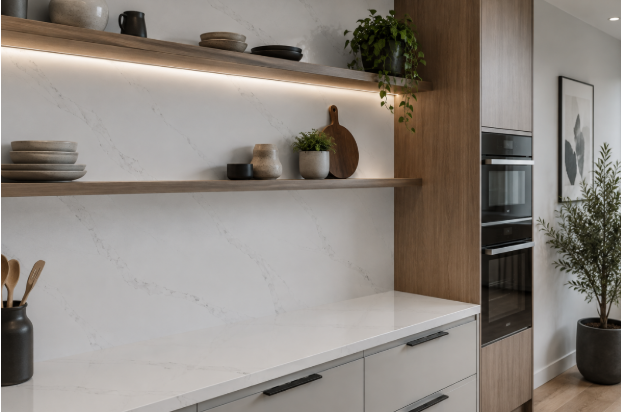
Quartz worktops are widely used in modern kitchens because they combine a stone-like appearance with practical everyday characteristics. Cimstone quartz is an engineered quartz surface made using natural quartz crystals combined with resins and pigments. Cimstone is available in a range of colours and patterns designed to replicate the appearance of natural stone while providing a consistent manufactured surface.
Unlike natural marble or granite, engineered quartz is manufactured under controlled conditions. This allows manufacturers to create specific colours, patterns, and finishes across different slab designs. The Cimstone range includes numerous marble-inspired styles, concrete effects, darker surfaces, and neutral colours.
What Is Cimstone Quartz Made From?
Cimstone is primarily composed of natural quartz combined with binding materials and pigments. Quartz is a hard mineral, which contributes to the surface's resistance to everyday scratching and abrasion.
Cimstone's published information describes its material as a compact, non-porous surface. Independent UK worktop suppliers describe some Cimstone products as containing more than 90% quartz crystals, with the remaining composition consisting primarily of resins and pigments.
The engineered manufacturing process also allows patterns to be produced with greater consistency than naturally occurring stone.
This can be particularly useful when homeowners want a specific visual style throughout a kitchen rather than the natural variations found in marble or granite.
What Are the Benefits of Cimstone Quartz?
Non-Porous Surface
One of the major characteristics of engineered quartz is its low-absorption surface.
Cimstone describes its material as non-porous, meaning liquids do not readily penetrate the surface. This makes quartz worktops practical for food preparation areas where spills can occur regularly.
The non-porous structure also means Cimstone worktops do not require routine sealing in the same way that some natural stone surfaces do.
Scratch Resistance
Quartz is naturally hard, and this contributes to the durability of engineered quartz surfaces.
Cimstone states that its surfaces are highly resistant to scratches and abrasion. However, resistance does not mean the surface is completely immune to damage. The manufacturer recommends using a cutting board rather than cutting directly on the worktop.
Using appropriate preparation surfaces can help preserve the finish over many years.
Stain Resistance
Kitchen worktops regularly come into contact with coffee, sauces, oils, juices, and other substances.
The compact structure of Cimstone makes the surface resistant to staining when properly maintained. Fresh spills should nevertheless be cleaned promptly rather than being allowed to dry on the surface.
This is particularly useful in busy kitchens where frequent food preparation takes place.
What Colours Are Available?
Cimstone offers a broad selection of colours and patterns.
The current colour collection listed by Quartz Supply includes designs such as Carrara Enigma, Statuario Venatino, Calacatta Magnificio, Calacatta Venato, Nero Marquina, Bianco Carrara, Calacatta Lucia, and Calacatta Vicenza.
The range includes:
-
White marble effects
-
Grey veined designs
-
Concrete-inspired finishes
-
Dark stone effects
-
Neutral colours
-
Matte surfaces
-
Polished surfaces
This variety allows quartz worktops to be incorporated into both traditional and contemporary kitchen designs.
What Is 981 Calacatta Vicenza Quartz?
One of the marble-inspired options in the collection is 981 Calacatta Vicenza Quartz, which features a white base with prominent veining. Current UK worktop listings describe the design as having a white background with grey and gold-toned veining and a polished finish.
The combination of a light background and dramatic veining creates a marble-inspired appearance while retaining the practical characteristics associated with engineered quartz.
This type of design can work particularly well as a kitchen island, perimeter worktop, breakfast bar, or other prominent surface where the veining can become part of the overall interior design.
Is Cimstone Quartz Good for Kitchen Worktops?
Yes, engineered quartz is particularly suited to kitchen worktops because it offers a combination of durability, stain resistance, and relatively simple maintenance.
Cimstone's own care guidance identifies kitchen worktops and countertops as suitable applications and recommends straightforward cleaning with a damp cloth and mild liquid detergent.
The material's non-porous characteristics can also be beneficial for food preparation areas.
However, proper installation remains important. Sink cut-outs, hob openings, joins, edges, and overhangs should be fabricated and supported correctly to reduce the risk of cracking or chipping.
How Do You Clean Cimstone Quartz?
Routine cleaning is relatively simple.
For everyday cleaning, Cimstone recommends using a damp cloth or gentle sponge with water or a suitable mild liquid detergent. The surface should then be rinsed to remove cleaning residue.
For dried-on material, the manufacturer recommends gently removing the residue with a plastic scraper before cleaning the area.
Cleaning spills promptly is preferable because dried food, oils, and other substances can require more effort to remove.
What Cleaning Products Should You Avoid?
Strong chemicals and abrasive cleaning products can damage quartz surfaces.
Cimstone advises against abrasive powders, metal scouring pads, strong alkaline products containing active hydroxide, and strong acids. Products containing solvents such as trichloroethane or methylene chloride should also be avoided.
It is also important not to leave cleaning products sitting on the worktop for extended periods.
After using an appropriate cleaning product, rinse the surface thoroughly.
Does Cimstone Quartz Need Sealing?
No. Cimstone's non-porous engineered surface does not require routine sealing.
This is one difference between quartz worktops and some porous natural stone surfaces that may require periodic sealing to help manage liquid absorption and staining.
Cimstone also advises against applying polish or attempting on-site polishing because the surface's natural sheen comes from the quartz itself.
Routine cleaning is generally sufficient for maintaining the surface.
Is Cimstone Quartz Heat Resistant?
Cimstone can tolerate brief exposure to moderately hot temperatures, but it should not be treated as completely heat-proof.
The manufacturer recommends using trivets and specifically advises against placing hot pans directly onto the surface. Prolonged exposure to high temperatures or an open flame can cause damage, including cracking or discolouration.
This is particularly important around cooktops, ovens, and other high-temperature areas.
A simple trivet or heat-resistant mat can provide an additional layer of protection.
How Does Cimstone Compare With Marble?
Cimstone can reproduce the visual appearance of marble while offering some practical differences.
Natural marble is a natural stone with distinctive veining and variations from slab to slab. It can also be more vulnerable to scratching and chemical etching.
Engineered quartz offers a more controlled appearance because its colour and pattern are manufactured. It is also non-porous and does not require routine sealing.
However, people who particularly value the natural variation and geological character of genuine marble may prefer natural stone despite its additional maintenance requirements.
What Thickness Options Are Available?
Cimstone worktops are available through UK suppliers in different thicknesses depending on the colour and fabrication requirements.
For example, current listings for Calacatta Vicenza show 20mm and 30mm options, with slab dimensions of approximately 3200 × 1600mm.
The appropriate thickness depends on the design, cabinetry, edge profile, overhangs, support requirements, and installation specifications.
A professional fabricator can advise on the appropriate specification for a particular kitchen layout.
What Should You Consider Before Choosing Cimstone?
Start by considering the overall kitchen design.
A strongly veined surface can become a focal point, while a more understated quartz colour may work better when cabinets, flooring, splashbacks, or other features already have strong visual patterns.
Also consider:
-
Slab dimensions
-
Worktop thickness
-
Surface finish
-
Veining direction
-
Edge profile
-
Sink configuration
-
Hob cut-outs
-
Island dimensions
-
Installation requirements
-
Maintenance requirements
It is also advisable to view a physical sample whenever possible. Digital images can vary depending on screen settings and lighting, while natural and artificial lighting can change how quartz appears in a finished kitchen.
How Should Cimstone Quartz Be Maintained Long Term?
Long-term maintenance is primarily about avoiding unnecessary damage.
Use chopping boards instead of cutting directly on the worktop. Place hot cookware on trivets rather than directly on the quartz. Clean spills promptly and use non-abrasive cleaning products.
Cimstone also recommends protecting corners and edges from strong impacts because even durable quartz surfaces can chip or break when subjected to significant force.
These simple precautions can help preserve the appearance of the worktop.
Conclusion
Cimstone quartz combines natural quartz with engineered materials to create a durable, non-porous worktop surface available in a wide selection of colours, patterns, and finishes. Its resistance to everyday staining and scratching, combined with straightforward cleaning requirements, makes it well suited to kitchen applications. For homeowners looking for a marble-inspired option, 981 Calacatta Vicenza Quartz features a white base with distinctive grey and gold-toned veining and is available in polished finishes and multiple thickness options through UK suppliers. Ultimately, selecting the right quartz worktop involves balancing appearance, surface finish, dimensions, maintenance requirements, installation considerations, and the overall design of the kitchen. With appropriate care and protection from excessive heat, harsh chemicals, and heavy impacts, Cimstone quartz can provide a practical surface for everyday kitchen use.